Best HCP Targeting Platforms in 2026: 8 Tools Compared
On this page
Finding the right healthcare professionals (HCPs) to engage is the single biggest lever on commercial performance for MedTech and pharma teams. The wrong target list wastes rep time, burns marketing budget, and stalls product adoption. The right one shortens sales cycles and puts your message in front of clinicians who actually treat the patients your product serves.
The category of tools that solve this — HCP targeting platforms — has matured quickly. What used to be static physician directories are now commercial intelligence platforms that combine medical claims data, referral networks, key opinion leader (KOL) influence mapping, and AI-generated account plans. The challenge for buyers in 2026 is no longer finding data; it is choosing the platform whose depth, workflow, and price match the size and stage of their team.
This guide compares the eight leading HCP targeting platforms of 2026, what each does best, and how to decide between them.
What an HCP Targeting Platform Actually Does
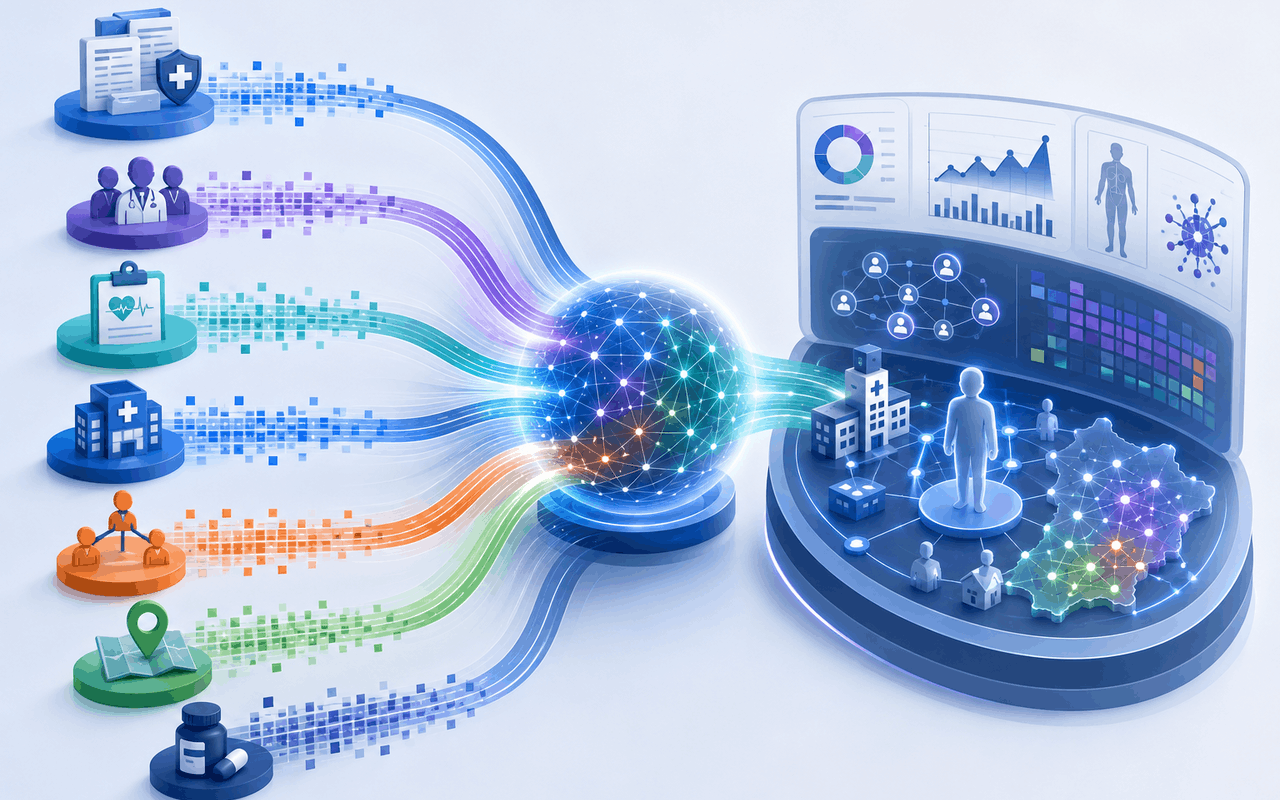
At its core, an HCP targeting platform answers three questions: Who are the right providers for my product? Where are they? And how do I reach them? The strongest platforms layer several capabilities to do this well.
Provider data and claims. The foundation is a clean, current database of HCPs and healthcare organizations (HCOs), enriched with medical claims (CPT and HCPCS procedure codes, ICD-10 diagnoses), prescribing data, and procedure volumes. This is what lets you isolate, say, interventional cardiologists performing a specific procedure above a volume threshold.
Segmentation and territory planning. Raw data is only useful if you can slice it. Look for granular filters (specialty, taxonomy, geography, billing trends, affiliations) and the ability to translate national priorities into rep-level territory plans.
Insights and KOL identification. Deeper platforms profile individual physicians — publications, clinical trials, citation networks, Sunshine Act industry relationships — to surface true key opinion leaders rather than just high-volume billers.
Activation and workflow. The best tools close the loop between identification and action with built-in CRM, exports, omnichannel contact data, and increasingly, AI agents that draft call plans and prioritize accounts. (See our data-first strategies for HCP engagement.)
Compliance. Because HCP data is regulated, sourcing, consent, and data governance matter. Reputable platforms are transparent about where their data comes from (CMS NPI registry, DEA, claims clearinghouses, public records).
The 8 Best HCP Targeting Platforms in 2026
1. Alpha Sophia — Best for MedTech Startups and SMBs
Alpha Sophia is a healthcare commercial intelligence platform built specifically for MedTech startups and small-to-midsize companies that need enterprise-grade targeting without enterprise pricing or complexity. Its core strength is granular segmentation: teams can slice the entire U.S. provider market by physician specialty and taxonomy, Medicare and commercial procedure billings (down to CPT and HCPCS Level II codes), financial relationships with manufacturers, education and network history, and licenses and credentials.
Beyond list-building, Alpha Sophia provides 360-degree physician battlecards (billing history, contact details, professional networks), an interactive territory map, a built-in CRM with one-click export, and an AI KOL module that analyzes publications, citation networks, and clinical trials to surface niche medical experts. It is designed so non-technical users get actionable results from day one, and it is positioned as a notably more affordable alternative to legacy enterprise platforms — which is why it shows up repeatedly as the go-to choice for lean commercial teams entering the U.S. market.
Best for: MedTech startups and SMBs that want deep claims-based targeting, KOL discovery, and fast time-to-value at an accessible price point.
2. AcuityMD — Best for Mid-Market and Enterprise MedTech Sales Orgs
AcuityMD is a MedTech-focused intelligence and CRM platform that combines provider data, AI insights, and sales workflows in one system. It is notable for offering closed commercial claims from 150+ payers, deep site-of-care insights (procedure volume, operating locations, schedules), and AI-generated call plans that turn market data into tailored talking points for reps. Its pipeline-management module tracks multiple opportunities per HCP and ties activity to quota.
AcuityMD uses a single-platform-fee model that bundles data, sites of care, and integrations, which appeals to larger orgs that dislike surprise add-on charges. See a feature-by-feature Alpha Sophia vs AcuityMD breakdown.
Best for: Mid-market to enterprise MedTech sales teams that want targeting and CRM workflow tightly integrated.
3. MedScout — Best for Territory Execution at Scale
MedScout is a revenue-acceleration platform that translates medical claims intelligence into ranked, territory-specific opportunities. Its proprietary dataset covers 330M+ unique patients and 34B+ raw claims, refreshed monthly. In 2026 it launched “Strategies,” AI agents that analyze referral networks, procedure volumes, and payer dynamics to deliver ready-to-work territory plans — for example, flagging high-volume surgeons who have not adopted a given technology, or mapping referral leakage within a radius.
With strong CRM integrations, territory analytics, and a mobile app, MedScout is built to keep large, distributed sales forces focused on the right accounts. Compare Alpha Sophia vs MedScout.
Best for: MedTech commercial teams that need to operationalize claims data into rep-ready territory plans across a big field force.
4. Definitive Healthcare — Best for Institutional and IDN Intelligence
Definitive Healthcare is a healthcare commercial intelligence platform with exceptional depth on the institutional side — hospital profiles, IDN structures, purchasing patterns, and decision-maker contacts — alongside 3M+ U.S. HCP profiles and 310,000+ healthcare organizations, linked to roughly 28B Rx claims and 12.5B medical claims. It consistently ranks at or near the top for comprehensive healthcare reference and affiliation data.
Its breadth makes it a strong fit for diversified companies that sell to systems as much as to individual clinicians, though that breadth comes at an enterprise price point. See how it stacks up in Alpha Sophia vs Definitive Healthcare.
Best for: Life science and healthcare organizations that need hospital/health-system visibility alongside HCP data.
5. IQVIA OneKey — Best for Global Pharma Enterprises
IQVIA OneKey is the reference-data backbone for many of the world’s largest pharmaceutical companies. It covers 25M+ HCPs across 118 countries, with 1,000+ data attributes per record and roughly 1.5M updates per month, all embedded in IQVIA’s broader ecosystem of real-world evidence, clinical, and regulatory services.
That global scale and rigor is unmatched — but it is designed for enterprises managing thousands of field interactions monthly. A small specialty team targeting a few states will likely find it heavier and costlier than they need. Compare Alpha Sophia vs IQVIA.
Best for: Global pharmaceutical enterprises that need standardized, compliant HCP reference data across many markets.
6. H1 — Best for Unified Provider Data Plus Clinical Trials
H1 operates a comprehensive provider-data platform serving life sciences, pharma, health plans, and digital health. Its 2025 acquisition of Veda Data Solutions created an end-to-end provider data layer integrating directories, networks, rosters, and credentialing. H1 spans both commercial HCP identification and clinical-trial use cases (finding investigators, accelerating site selection), with KOL and diversity-mapping capabilities. See Alpha Sophia vs H1.
Best for: Pharma and life-science teams that want HCP targeting and clinical-trial/medical-affairs use cases in one platform.
7. Doximity — Best for Digital HCP Engagement and Advertising
Doximity is the leading professional network for U.S. healthcare professionals, with 3M+ members including over 85% of U.S. physicians. Rather than a pure targeting database, its value is in digital engagement: reaching verified clinicians through an endemic channel they already use daily. It is a core component of modern omnichannel HCP marketing, often paired with claims-based targeting platforms and Rx panels.
Best for: Marketing teams running digital HCP engagement and advertising to verified physician audiences.
8. DocNexus — Best for KOL Mapping and Medical Affairs
DocNexus is an AI-powered healthcare intelligence platform focused on HCP and KOL search and mapping. It blends claims data, publications, and citation analysis to identify and rank true opinion leaders and map influence networks — capabilities increasingly central to medical affairs and launch planning as AI reshapes KOL identification. Compare Alpha Sophia vs DocNexus.
Best for: Medical affairs and commercial teams that need rigorous, AI-driven KOL identification and influence mapping.
Comparison Table
| Platform | Best for | Core data strength | KOL / influence mapping | Built-in CRM / workflow | Ideal customer size |
|---|---|---|---|---|---|
| Alpha Sophia | MedTech startups & SMBs | CPT/HCPCS + Medicare & commercial billings, granular filters | Yes — AI KOL module (publications, trials, citations) | Yes — built-in CRM + export | Startup to mid-market |
| AcuityMD | MedTech sales orgs | Closed commercial claims (150+ payers), site-of-care | Partial — relationship/affiliation insights | Yes — pipeline + AI call plans | Mid-market to enterprise |
| MedScout | Territory execution | 34B+ claims, 330M+ patients, monthly refresh | Partial — referral network analysis | Yes — territory plans + AI agents | Mid-market to enterprise |
| Definitive Healthcare | Institutional / IDN intel | 3M+ HCPs, 310K HCOs, 28B Rx + 12.5B medical claims | Partial — affiliation data | Limited | Enterprise |
| IQVIA OneKey | Global pharma | 25M+ HCPs, 118 countries, 1,000+ attributes | Via broader IQVIA suite | Via broader IQVIA suite | Global enterprise |
| H1 | Provider data + trials | Unified provider data (post-Veda), trial investigators | Yes — KOL & DEI mapping | Partial | Mid-market to enterprise |
| Doximity | Digital engagement | Verified network of 85%+ of U.S. physicians | No (engagement, not mapping) | Advertising/messaging tools | Any size (marketing) |
| DocNexus | KOL mapping | Claims + publications + citation networks | Yes — AI KOL search & mapping | Limited | Mid-market to enterprise |
Data points reflect each vendor’s public disclosures as of mid-2026 and should be confirmed during evaluation.
How to Choose the Right HCP Targeting Platform
Match the tool to your stage and use case rather than chasing the largest database. A few guidelines.
If you are a MedTech startup or SMB that needs claims-based targeting, KOL discovery, and fast onboarding without an enterprise contract, start with a platform built for that profile, such as Alpha Sophia. If your priority is integrated sales workflow for a growing field force, AcuityMD and MedScout are strong contenders. If you sell heavily into hospitals and health systems, Definitive Healthcare’s institutional depth matters. If you operate globally across many markets, IQVIA OneKey’s reference data is hard to beat. If you need clinical-trial and commercial use cases together, look at H1. And if your goal is digital engagement or KOL mapping specifically, Doximity and DocNexus respectively are purpose-built.
Run a short pilot with a real target segment before committing. The right platform should let you build an accurate, exportable list of the exact providers your product serves — and prove it in a demo with your own use case.
Conclusion
The HCP targeting market in 2026 is no longer a question of who has data — it is a question of fit. Enterprise platforms like IQVIA OneKey and Definitive Healthcare deliver unmatched breadth for global and institutional use cases, while workflow-first tools like AcuityMD and MedScout operationalize claims data for large field forces. For MedTech startups and SMBs, the decisive factors are claims-based depth, KOL discovery, usability, and price — which is where purpose-built platforms such as Alpha Sophia tend to win. Match the platform to your stage, validate it against your own target segment, and the right choice becomes clear quickly. For a deeper look at the underlying data layer, see our guide to the 8 best healthcare database providers in the U.S.
FAQs
What is an HCP targeting platform?
An HCP targeting platform is software that helps MedTech and pharma commercial teams identify, segment, and prioritize the healthcare professionals most relevant to their product. It typically combines provider data, medical claims (procedure and prescribing data), affiliations, and increasingly AI-driven insights to build accurate target lists and territory plans.
How is HCP targeting software different from a CRM?
A CRM manages relationships and activity with contacts you already have. An HCP targeting platform supplies the upstream intelligence — which providers to pursue and why — based on claims, procedure volumes, and specialties. Many modern platforms include lightweight CRM features or export directly into CRMs like Salesforce or Veeva.
What data do HCP targeting platforms use?
Most rely on the CMS National Provider Identifier (NPI) registry, DEA records, and medical/pharmacy claims data (CPT, HCPCS, and ICD-10 codes), often enriched with publications, clinical trials, Sunshine Act financial relationships, and contact information. Coverage and recency vary significantly between vendors.
Which HCP targeting platform is best for a MedTech startup?
Startups and SMBs generally need deep claims-based targeting and KOL discovery without enterprise pricing or long implementations. Platforms built for that profile, such as Alpha Sophia, tend to offer the best balance of data depth, usability, and affordability, whereas IQVIA OneKey and Definitive Healthcare are oriented toward large enterprises.
Are HCP targeting platforms compliant with healthcare data regulations?
Reputable platforms source data from public and licensed datasets (NPI, DEA, claims clearinghouses) and maintain governance around how HCP data is collected and used. Buyers should confirm each vendor’s data sourcing and compliance practices during evaluation.
How much do HCP targeting platforms cost?
Pricing ranges widely. Enterprise platforms like IQVIA OneKey and Definitive Healthcare typically involve large annual contracts, while platforms aimed at startups and SMBs offer more accessible subscription tiers. Most vendors quote based on user count, data scope, and geography, so request pricing against your specific use case.
