Alpha Sophia for Medical Consumables
Challenge

Commercial teams selling medical consumables in 2026 operate in a high-volume, low-margin environment where efficiency is the only way to maintain profitability. While demand for everyday supplies like syringes, wound care kits, and catheters is constant, the challenge lies in identifying exactly which HCPs and HCOs have the highest "reorder velocity." Without precise data, sales teams often treat every clinic the same, wasting time on low-volume accounts while high-yield opportunities go ignored.
Several structural inefficiencies frequently hinder the sales performance of medical consumables companies:
- The "Volume Guesswork" Problem:Most teams target based on broad specialty titles (e.g., "General Surgery") rather than the actual number of procedures performed that require specific supplies. This leads to a massive waste of field resources on accounts with low product throughput.
- GPO and IDN Opacity:As more independent practices are swallowed up by larger systems, it becomes harder for sales reps to know who actually makes the purchasing decisions. This lack of institutional visibility leads to reps barking up the wrong tree at the local level when the decision-making has moved to a corporate MSO or GPO.
- Reactive Reorder Cycles:Sales teams often wait for a "stock out" or a customer complaint before engaging. Without predictive data on procedure frequency, teams cannot anticipate when an account is about to run low, leaving the door open for a competitor to swoop in with a lower price.
- High Cost of Acquisition (CAC):In a commodity-driven market, the cost to acquire a new customer often eats up the first year of profit. Without maximizing ROI with targeted healthcare marketing strategies, companies struggle to identify which leads will actually turn into long-term, high-frequency buyers.
Solution
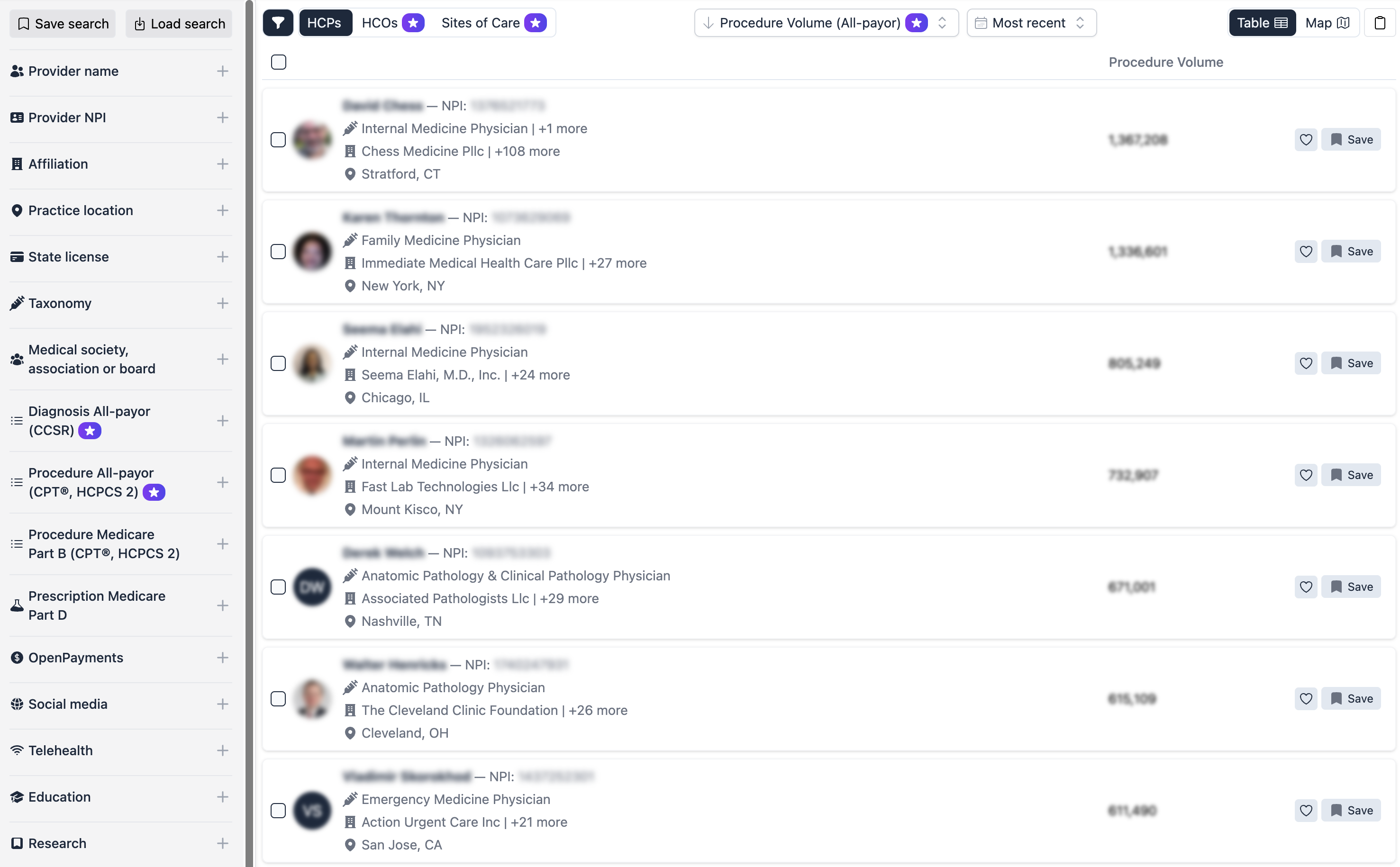
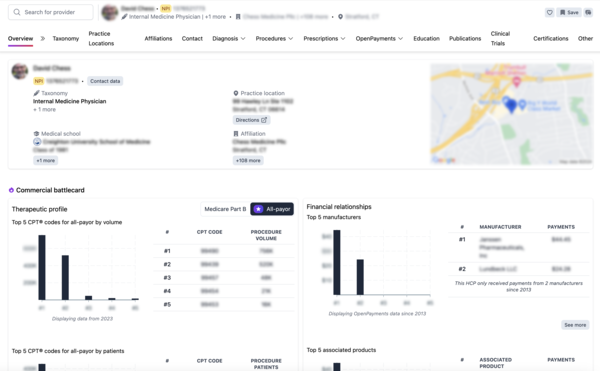
Alpha Sophia provides a specialized commercial intelligence engine that turns medical claims and procedure data into a roadmap for consumables sales. By analyzing the frequency of specific CPT and HCPCS codes, Alpha Sophia allows teams to identify the "heavy users" in any territory, ensuring that every sales call is focused on an account with verified, high-volume demand.
With Alpha Sophia, teams can:
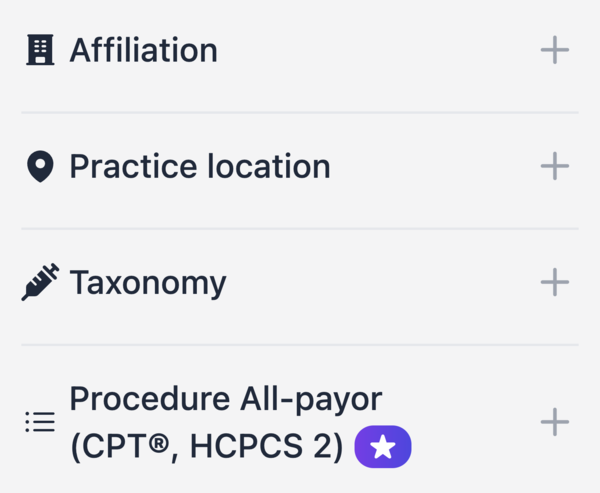
- Target by Procedure Intensity:Move beyond specialty labels to filter for providers who bill a high volume of procedures that require your specific consumable. If you sell IV supplies, you can target the specific clinics billing the highest number of infusion codes.
- Map Institutional Influence:Use healthcare organization (HCO) profiling to see the hidden links between individual clinics and the larger systems or MSOs that control their supply chains.
- Predict Market Expansion Needs:Identify geographic areas where procedure volumes are growing but supply presence is low. This allows for a proactive healthcare analytics approach to market expansion that puts your reps in the right place before the competition arrives.
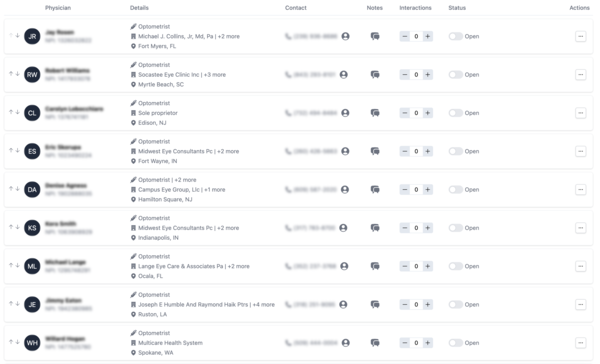
- Automate High-Volume Prospecting:Stop manually searching for leads. Use the platform to build dynamic lists of "Power-Users" who meet your specific volume criteria and push them directly to your field teams.
Example
A company selling specialized advanced wound care dressings can use Alpha Sophia to identify not just every podiatrist or dermatologist, but specifically those billing high volumes of debridement and skin substitute application codes (e.g., CPT 11042). By focusing outreach on the top 10% of these "high-intensity" users, the sales team can secure high-volume reorder contracts 3x faster than traditional cold-calling methods.