Alpha Sophia for Individual Patients & Patient Groups
Challenge

In 2026, the biggest hurdle for people with health issues isn't just getting care—it's getting the right care from the right expert. For someone dealing with a rare disease or a complex injury, the local doctor might not have the specialized experience needed. Patients often feel lost in a "Discovery Gap," where they spend months or even years bouncing between generalists before finally finding a specialist who understands their condition. This long road to a diagnosis can lead to worse health and a lot of unnecessary stress.
Several common problems make this journey difficult for patients and advocacy groups:
- The "Generalist Trap":Most online search tools just list a doctor's general title, like "Neurologist." But for a patient with a very specific nerve disorder, they need to know if that doctor actually treats their condition every day or just once a year. Without this data, patients end up at the wrong office, wasting time and money.
- The Rare Disease Search:Finding a specialist for a rare condition is like finding a needle in a haystack. Patient groups struggle to provide their members with a list of "Centers of Excellence" because they can't see which hospitals are actually performing the most specialized tests and treatments.
- Broken Care Pathways:Even after a diagnosis, patients often don't know where to go next. Navigating the 2026 patient journey requires a clear map of which surgeons, therapists, and specialists actually work together in a local area.
- Advocacy Without Evidence:Patient groups want to push for better care, but they often lack the "hard proof" of where the gaps in care are. Without data-driven patient engagement and support, it's hard to show insurance companies or hospitals that patients in a certain region are being underserved.
Solution
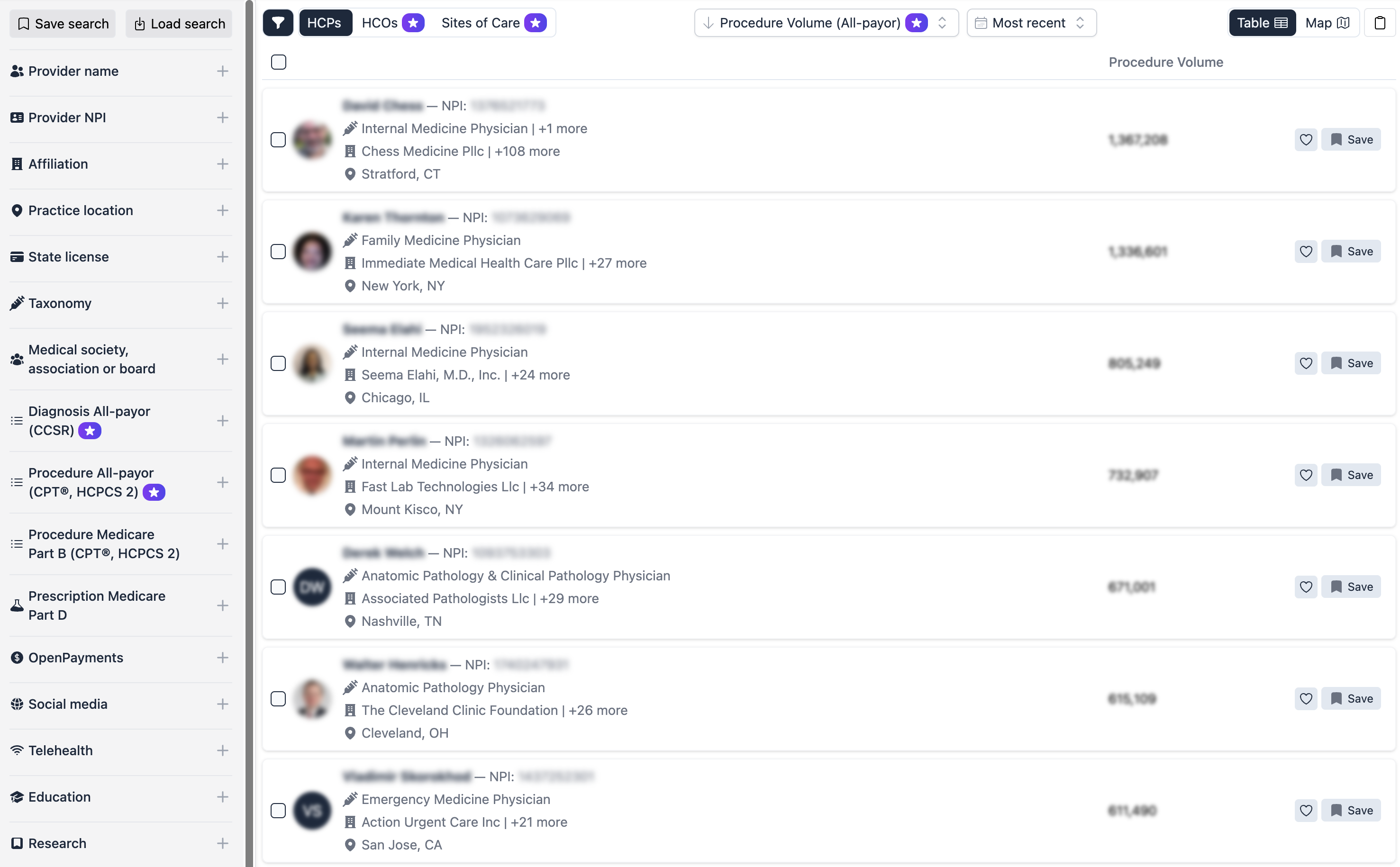
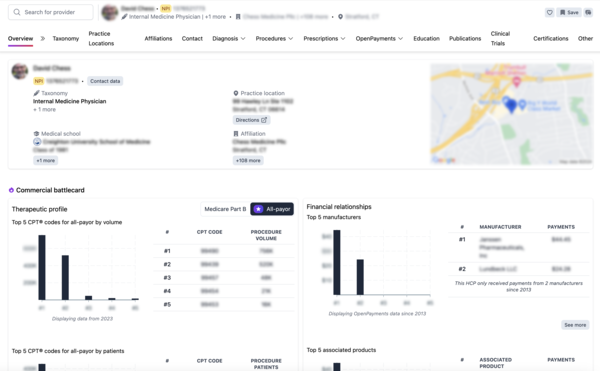
Alpha Sophia levels the playing field by giving patients and advocacy groups the same high-level data that big hospitals use. By looking at real-world billing and procedure data, Alpha Sophia shows you which doctors are actually the "Power-Users" for a specific condition. This turns a frustrating search into a simple, data-backed choice.
With Alpha Sophia, you can:
- Find True Specialists:Don't just look for a "Surgeon." Use the platform to find the specific doctor who has performed the highest volume of the exact procedure you need in the last 12 months.
- Map "Expertise Clusters":Patient groups can identify the top 10 specialists in any state for a specific rare disease, creating a "trusted provider list" based on actual clinical experience rather than just hospital marketing.
- See Who Treats Your Condition:Use ICD-10 diagnosis data to find the doctors who manage the largest panels of patients with your specific illness. This is one of the top strategic priorities for anyone trying to improve health outcomes.
- Find Local Care that Fits:Filter by location and insurance affiliations to find the best-rated experts who are actually near you and part of your network.
Example
A patient group for a rare genetic kidney disorder can use Alpha Sophia to search for nephrologists who have billed for specific genetic tests and rare diagnosis codes. Instead of telling their members to "see a kidney doctor," they can provide a list of the 15 doctors in the country who have treated more than 50 patients with that exact disorder. This cuts the time to find an expert from years to minutes.