Alpha Sophia for Product Development
Challenge

The most expensive mistake a MedTech or Pharma company can make is developing a product in a clinical vacuum. Many organizations spend years on R&D only to launch a solution that doesn't fit into a modern doctor's workflow or solve a high-priority patient problem. Without a deep, data-backed understanding of what healthcare professionals (HCPs) and organizations (HCOs) actually need, product teams often build for a theoretical market rather than the real one.
Several structural inefficiencies frequently hinder successful product development:
- The Clinical Disconnect:R&D teams often lack visibility into the day-to-day challenges of their target users. Without detailed performance metrics and patient demographic data, it is difficult to build features that address actual clinical pain points, leading to poor adoption rates.
- Missing Market Gaps:Organizations often struggle to identify where existing solutions are failing. This results in "me-too" products that offer no real competitive edge because the team couldn't properly identify market gaps using healthcare market research.
- Slow Time-to-Market:Relying on slow, manual surveys and static focus groups to validate product-market fit can add months or years to a project. Product teams need a "Source of Truth" that allows them to validate demand instantly using real-world clinical activity.
- Regulatory and Adoption Barriers:Products that don't consider the specific billing and reimbursement environment are doomed to fail commercially. Teams must understand the future of MedTech commercialization, including how technology is adopted and paid for, before they ever finalize a prototype.
Solution

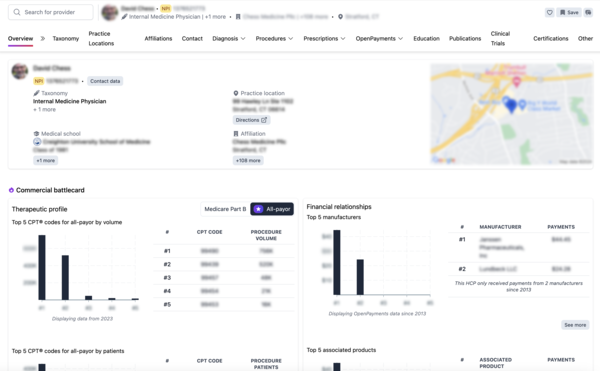
Alpha Sophia provides a unified clinical intelligence platform that informs every stage of the product development lifecycle. By consolidating detailed profiles of HCPs, HCOs, and Sites of Care—including their specialties, procedure volumes, and patient mixes—Alpha Sophia ensures your development strategy is anchored in clinical reality.
With Alpha Sophia, product teams can:
- Validate Demand with Procedure Data:Use CPT and HCPCS codes to see exactly which procedures are on the rise. If you are developing a new surgical tool, you can see which clinics are doing the most manual versions of that surgery today.
- Tailor Features to Patient Demographics:Filter by patient age, comorbidity clusters, and geographic location to ensure your product is designed for the actual people who will use it.
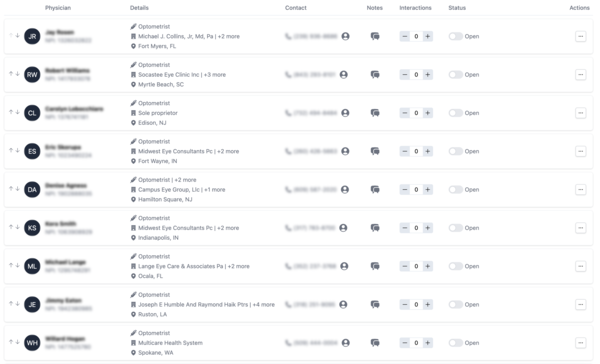
- Identify Early-Adopter Partners:Find the "innovation leaders" in the market to serve as beta testers and design partners. Being one of the top healthcare market research companies, Alpha Sophia helps you find the specific physicians who are already pushing the boundaries of technology.
- Analyze Competitive Displacement:See which organizations are currently using rival technologies by tracking billing intensity for specific "proxy" procedures, helping you design a product that is objectively better than the current standard of care.
Example
A startup developing an AI-powered diagnostic tool for cardiovascular disease can use Alpha Sophia to find cardiologists who manage a high volume of patients with "vague" symptom clusters (like chest pain with no clear cause). By analyzing the diagnosis codes these doctors bill, the startup can design an AI algorithm that specifically targets those difficult-to-diagnose cases. This ensures the final product solves a documented clinical "headache," leading to faster regulatory approval and immediate market interest.