Alpha Sophia for Patient-Practitioner Matching
Challenge

Finding the right healthcare provider, especially for specialized treatments or rare conditions, is a notoriously time-consuming and often inaccurate process. Patients frequently find themselves in a "discovery cycle," moving between generalists before finding the expert they actually need. Without detailed, real-world information about provider expertise, specific procedure volumes, and clinical focus, patients and healthcare administrators struggle to find the best fit. This lack of transparency leads to delayed care, increased costs, and suboptimal health outcomes.
Several structural gaps frequently hinder effective patient-practitioner matching:
- The "Generalist" Labeling Problem:Most provider directories rely on broad specialty titles like "Orthopedic Surgeon." However, a patient needs to know if that surgeon specializes in complex revision hip replacements or sports medicine. Without granular data, patients end up at the wrong office, wasting critical time.
- Invisible Expertise:Academic credentials and board certifications are important, but they don't show a provider's "clinical velocity." Patients need to know how often a doctor actually performs a specific procedure to gauge their expertise. This shift toward data-driven provider identification is the only way to ensure high-stakes matches.
- Fragmented Administrative Data:Directories are often plagued by "data decay"—outdated addresses, incorrect phone numbers, and shifted affiliations. This makes the simple act of booking an appointment a major hurdle for patients and care navigators alike.
- Lack of Cultural and Research Alignment:Many patients seek providers who are not only clinically skilled but also active in research or aligned with specific medical societies. Without a unified view that includes matched NPI data and practice context, these qualitative matches remain impossible to find.
Solution
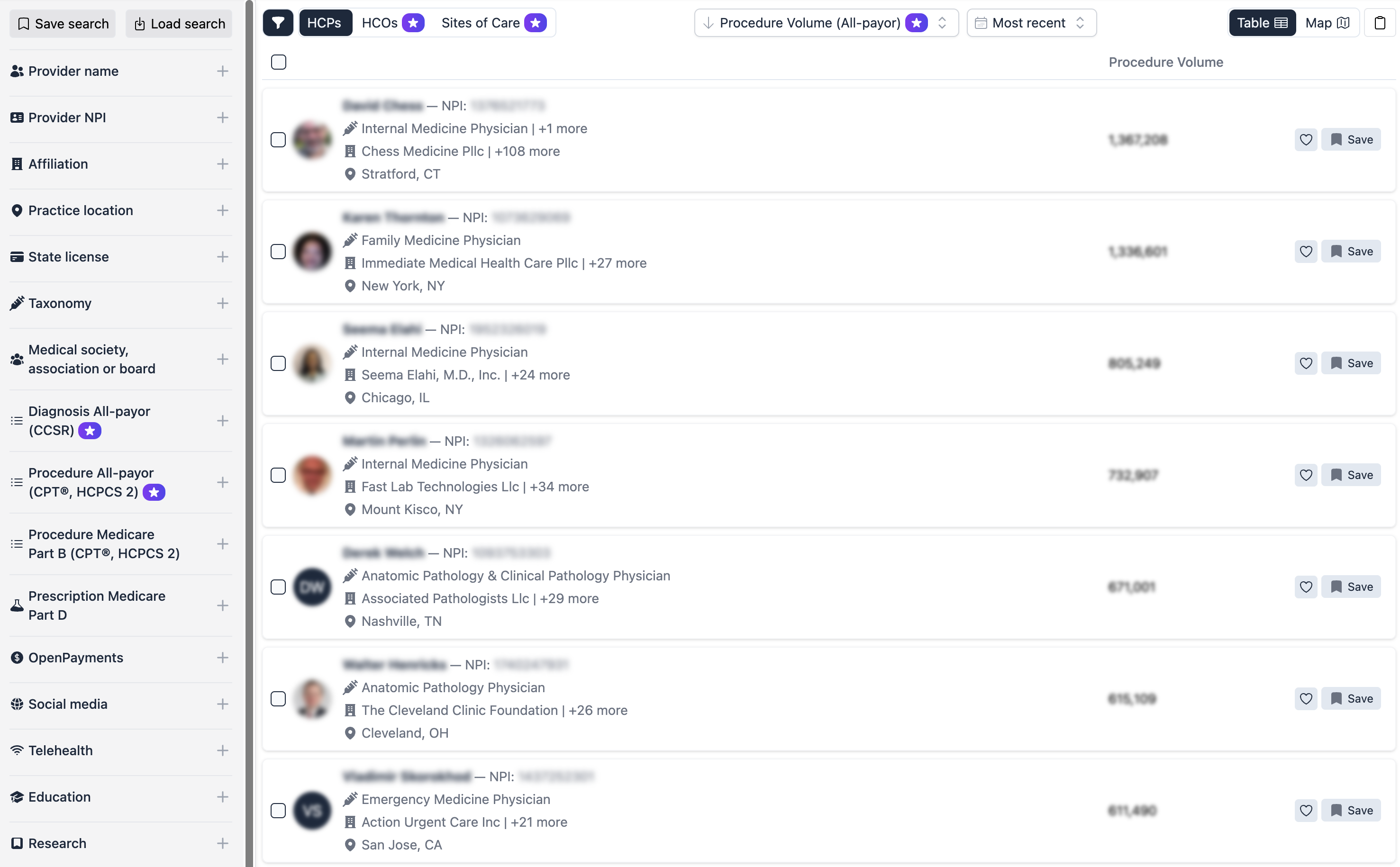
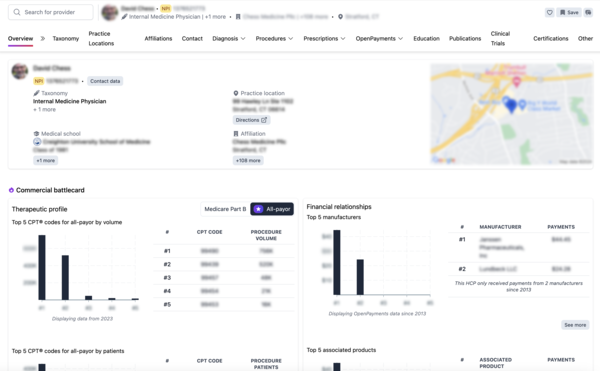
Alpha Sophia simplifies the patient-practitioner matching process by providing a comprehensive, data-backed view of every healthcare professional in the United States. By consolidating medical claims data, professional affiliations, research involvement, and social presence into a single platform, Alpha Sophia allows patients and healthcare administrators to identify the most relevant providers with surgical precision.
With Alpha Sophia, organizations can:
- Match by Procedure Mastery:Use real-world CPT and HCPCS billing data to find providers who have the highest volume and experience in specific treatments, moving beyond surface-level specialty titles.
- Verify Professional Standing and Influence:Screen providers based on their medical society memberships and research involvement. This ensures patients are matched with clinicians who are at the forefront of their field.
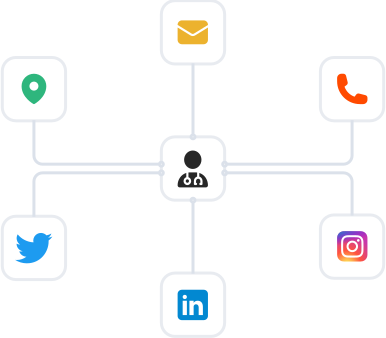
- Access Reliable Contact and Location Intelligence:Use our comprehensive healthcare provider API to power patient-facing directories with verified practice locations and up-to-date contact information.
- Personalize the Search Experience:Leverage social media presence and digital activity data to find providers who prioritize patient communication and transparency, aligning with modern patient-centric healthcare trends.
Example
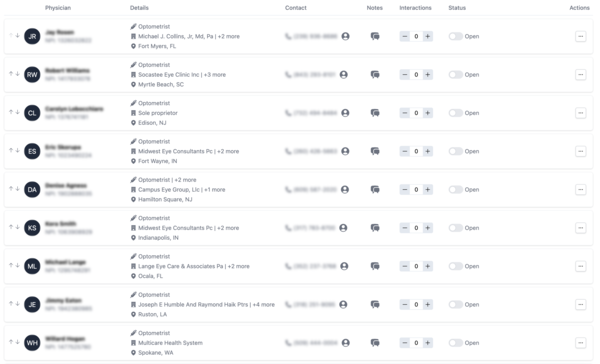
A care navigation platform helping a patient find a specialist for a rare minimally invasive heart valve repair can use Alpha Sophia to filter for interventional cardiologists who: 1) Have performed at least 50 of those specific procedures in the last year, 2) Are active members of the Society for Cardiovascular Angiography and Interventions, and 3) Are affiliated with a designated "Center of Excellence." By focusing on this high-expertise cohort, the platform can provide the patient with a shortlist of three providers who are statistically most likely to deliver a successful outcome.