Finding True Key Opinion Leaders: A 360° Approach
On this page
Related reading: Medical Affairs Playbook Structuring Pre And Post Kol Visit Strategy For Impact, Validate Market Opportunity Before Hiring Reps, 10 Best Medtech Startups Revolutionizing Healthcare, Healthcare Provider, Clinical Study.
Finding the right Key Opinion Leaders isn’t about who publishes the most or speaks the loudest—it’s about identifying the physicians who truly drive innovation and adoption in your space. In this walkthrough, we show how to take a 360° approach to KOL identification by combining publication data, clinical trial involvement, real-world procedure volume, and industry engagement. Using Alpha Sophia, you’ll learn how to move beyond surface-level signals and build a prioritized, actionable KOL strategy grounded in real clinical and commercial impact.
1. Starting Your Publication Search with Keywords & MeSH Topics
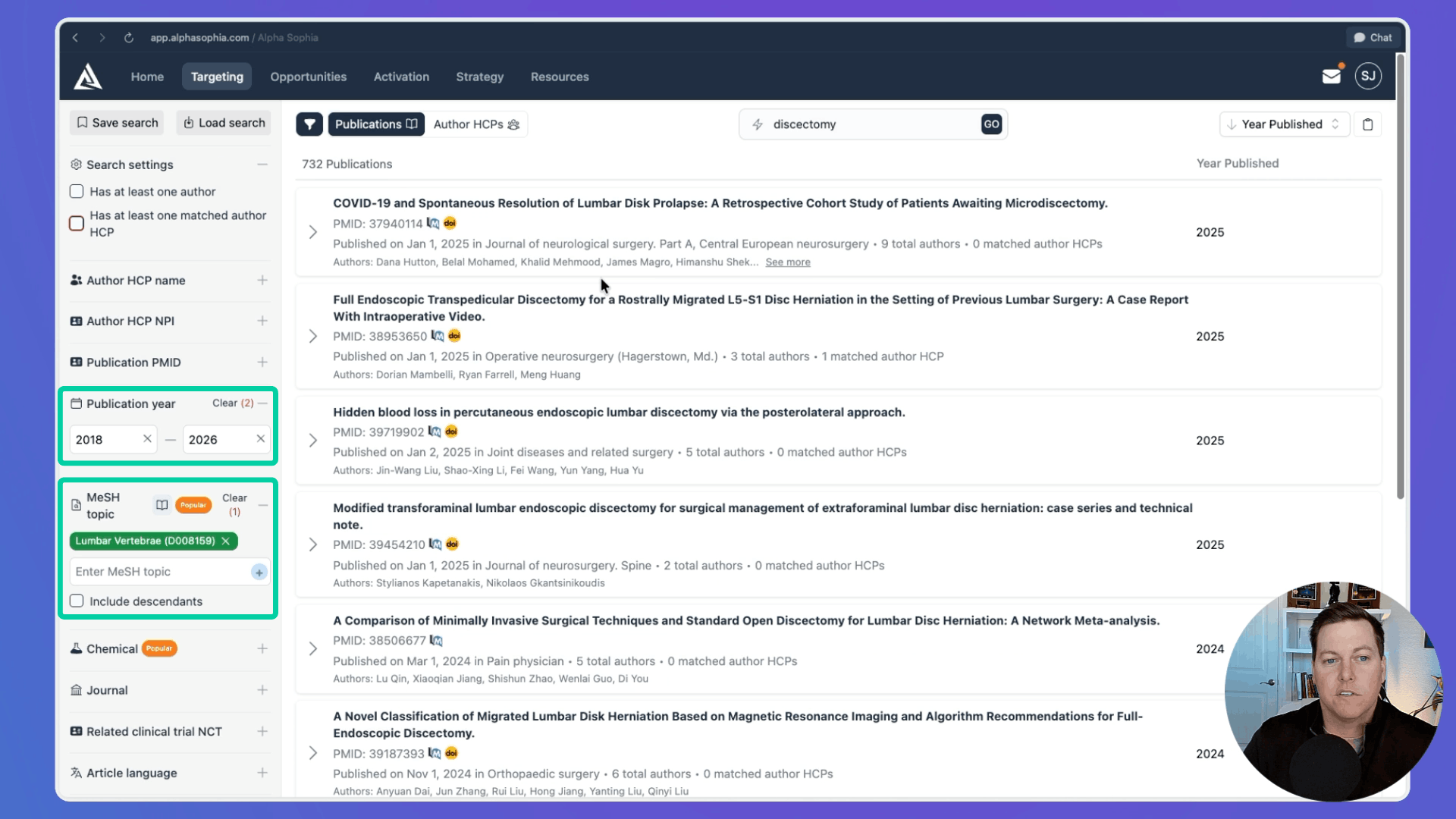
In KOL AI for Publications, begin by entering specific search terms related to your device’s indication or approach - not broad terms like “spine surgery,” but targeted ones like “T-Lift” or “discectomy.” Then layer in MeSH Topics (medical subject headings) like “Lumbar Vertebrae” to find researchers actively publishing in your specific therapeutic area. Filter by Publication Year (e.g., 2018–2026) to focus on recent, relevant work.
2. Filtering for Matched Author HCPs
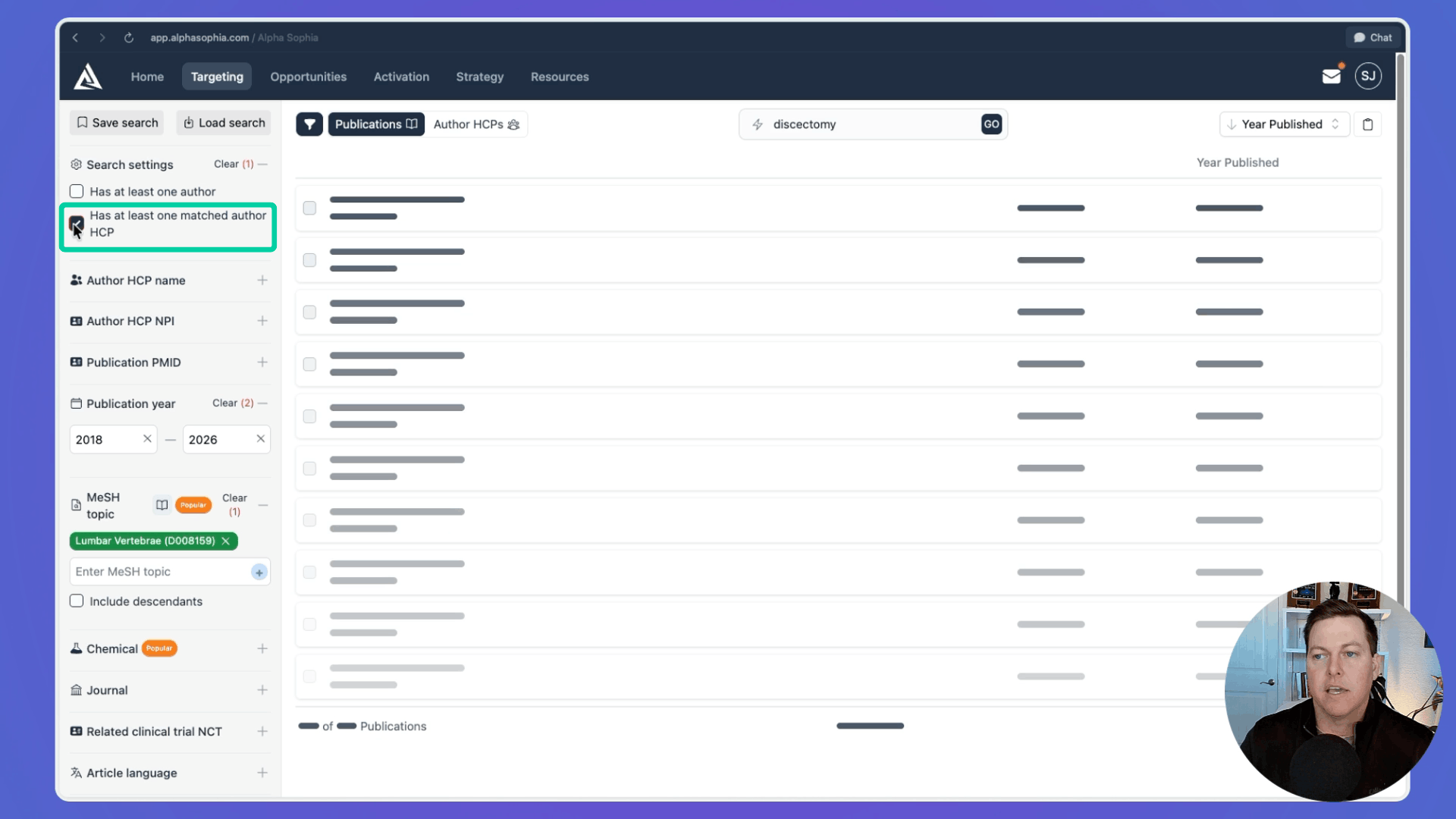
Under Search Settings, toggle “Has at least one author matched HCP.” This connects publication authors to Alpha Sophia’s healthcare provider database - so you’re not just finding who’s writing, you’re finding active practitioners you can build a full clinical and commercial profile on. Save this search with a descriptive name to come back to later.
3. Saving Searches vs. Saving to Lead Lists
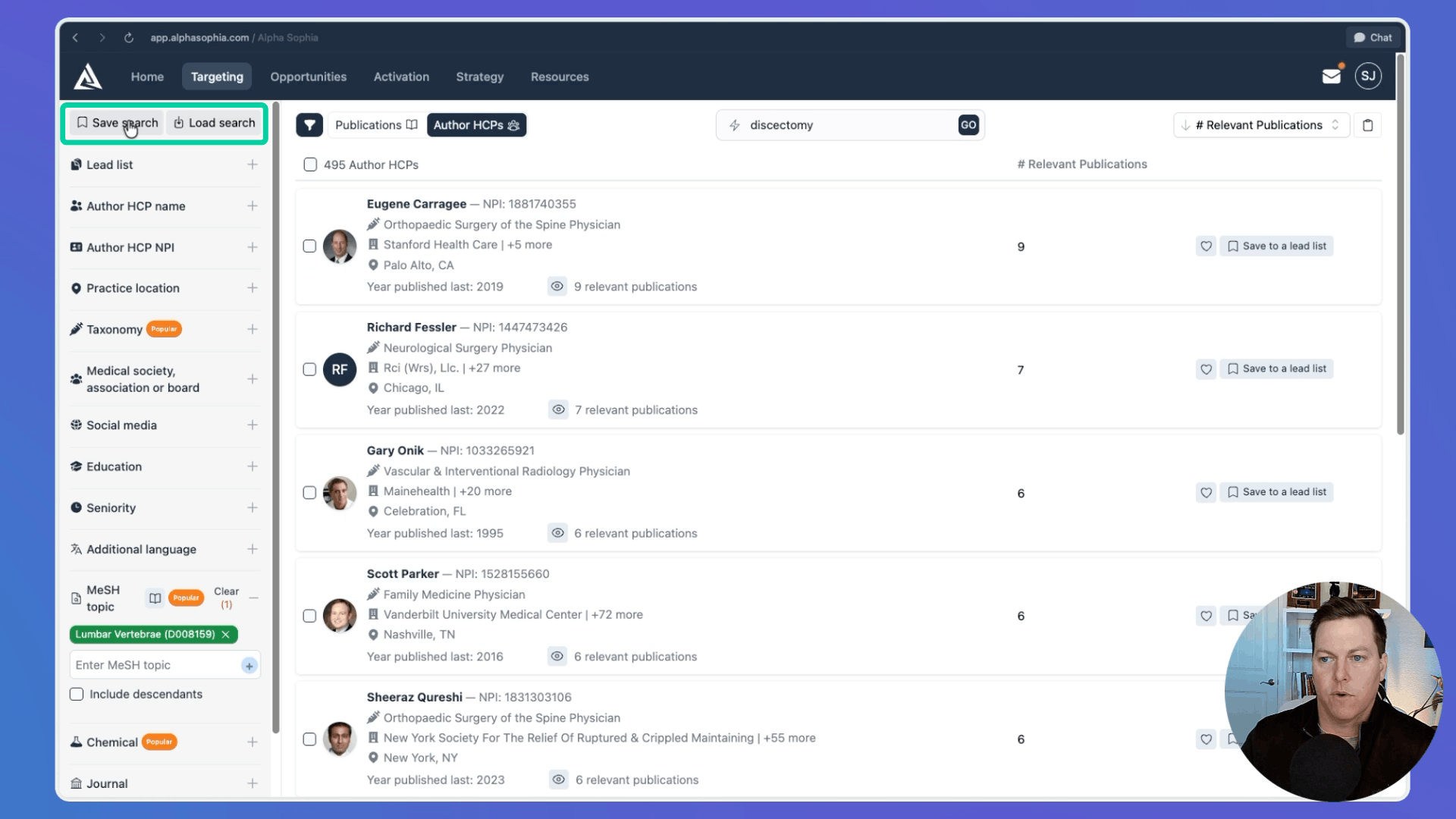
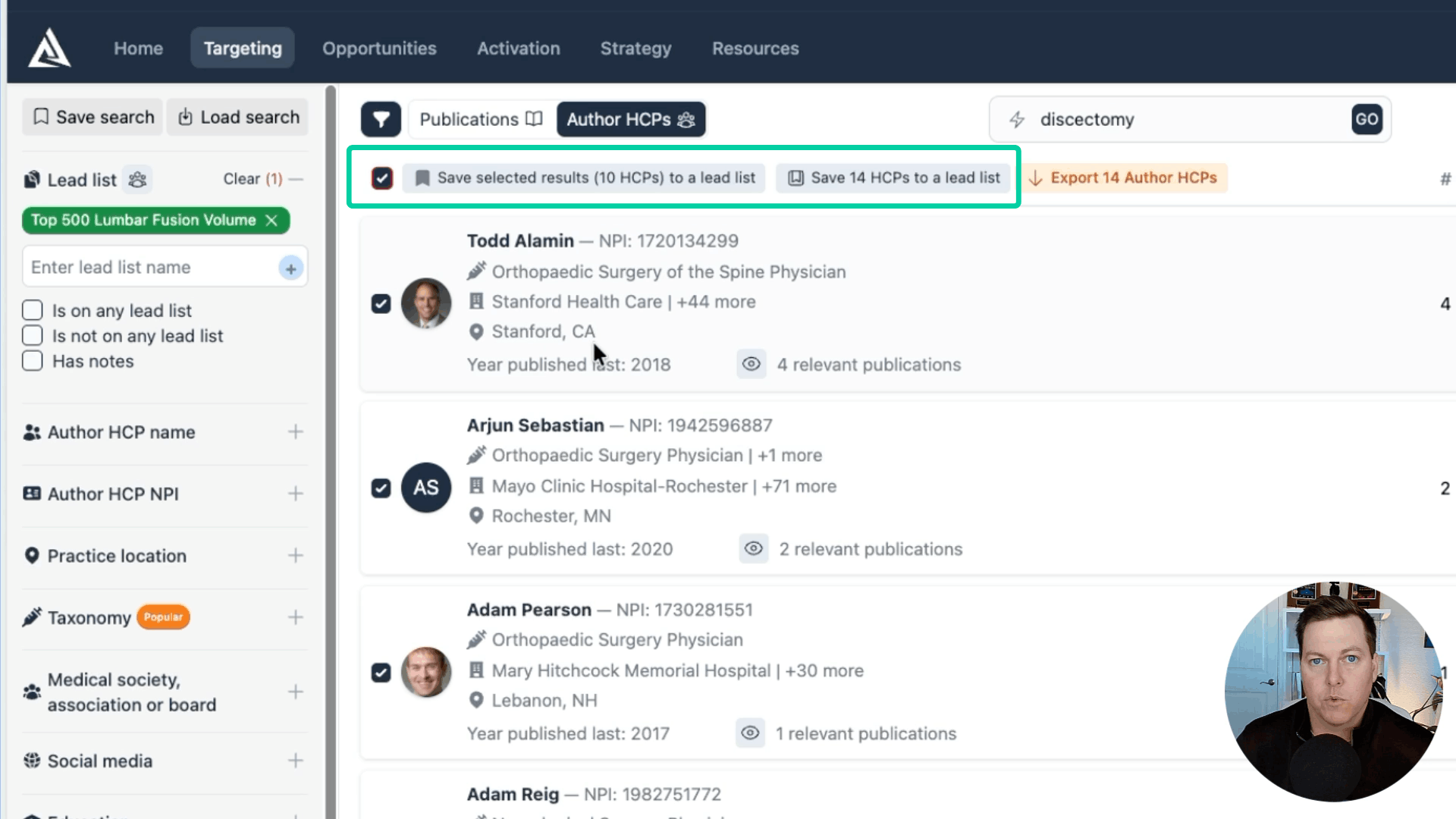
Use Save Search to preserve your specific filter criteria so you can revisit or refresh results later. Then selectively add physicians to a Lead List - either all results or hand-picked targets. This lets you build a curated KOL lead list separate from your broader search, giving you flexibility to cross-reference and refine across multiple searches.
4. Cross-Referencing with Author HCP Search
Switch to the Author HCPs view and apply the same MeSH topics and keywords. Then load an existing lead list - like “Top 500 Lumbar Fusion Volume Surgeons” - to see which of your high-volume targets are also authoring relevant publications. This cross-reference connects clinical activity with research output in one view.
5. Layering In Clinical Trials
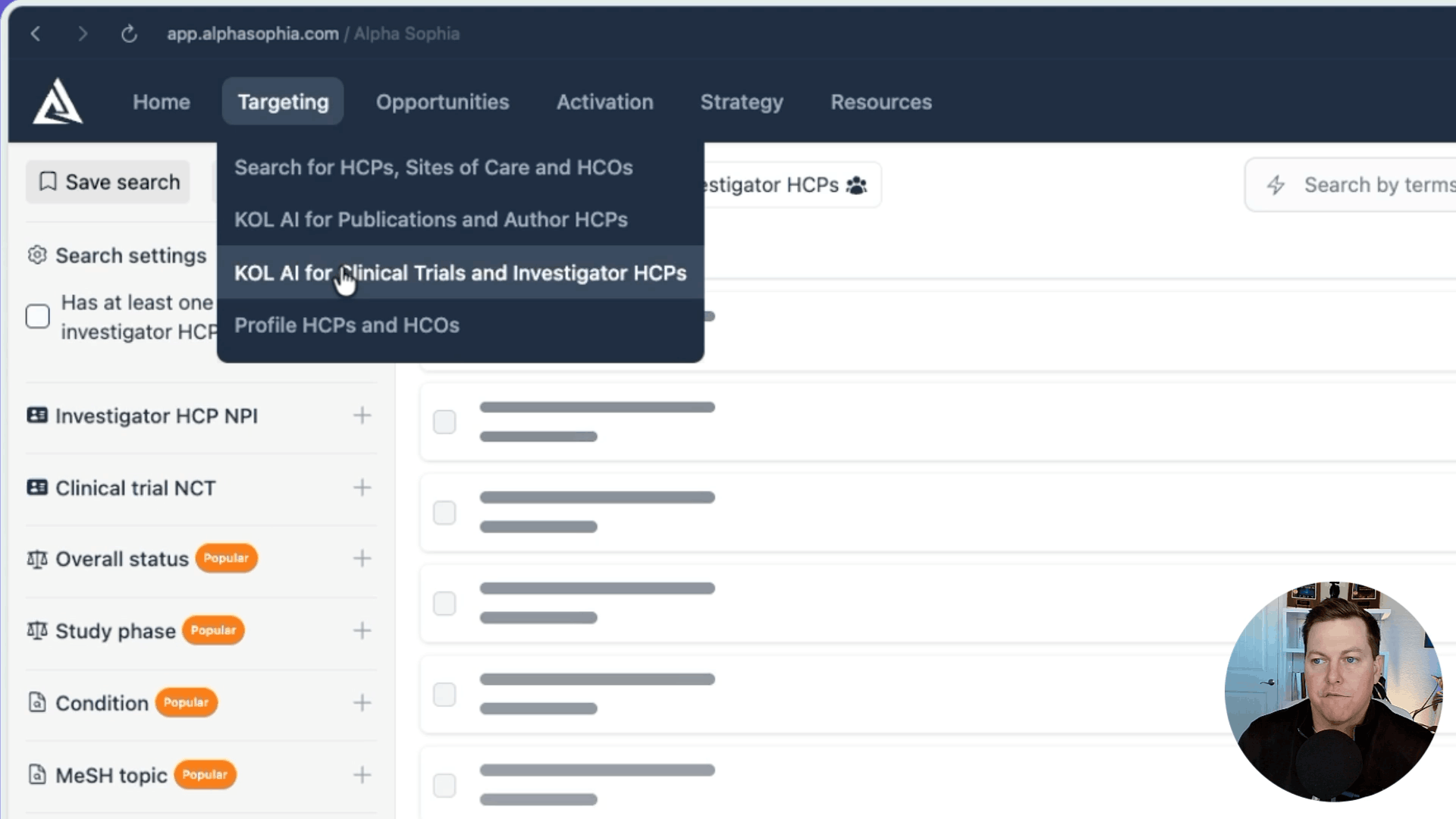
Navigate to KOL AI for Clinical Trials to search across 500,000+ trials by condition, intervention, or procedure. Publications tell you who’s thinking about your space - clinical trials show you who’s investing real time and money into advancing it. Look at trial status, start dates, and which investigators are matched in Alpha Sophia’s database.
6. Identifying Publication + Trial Overlap
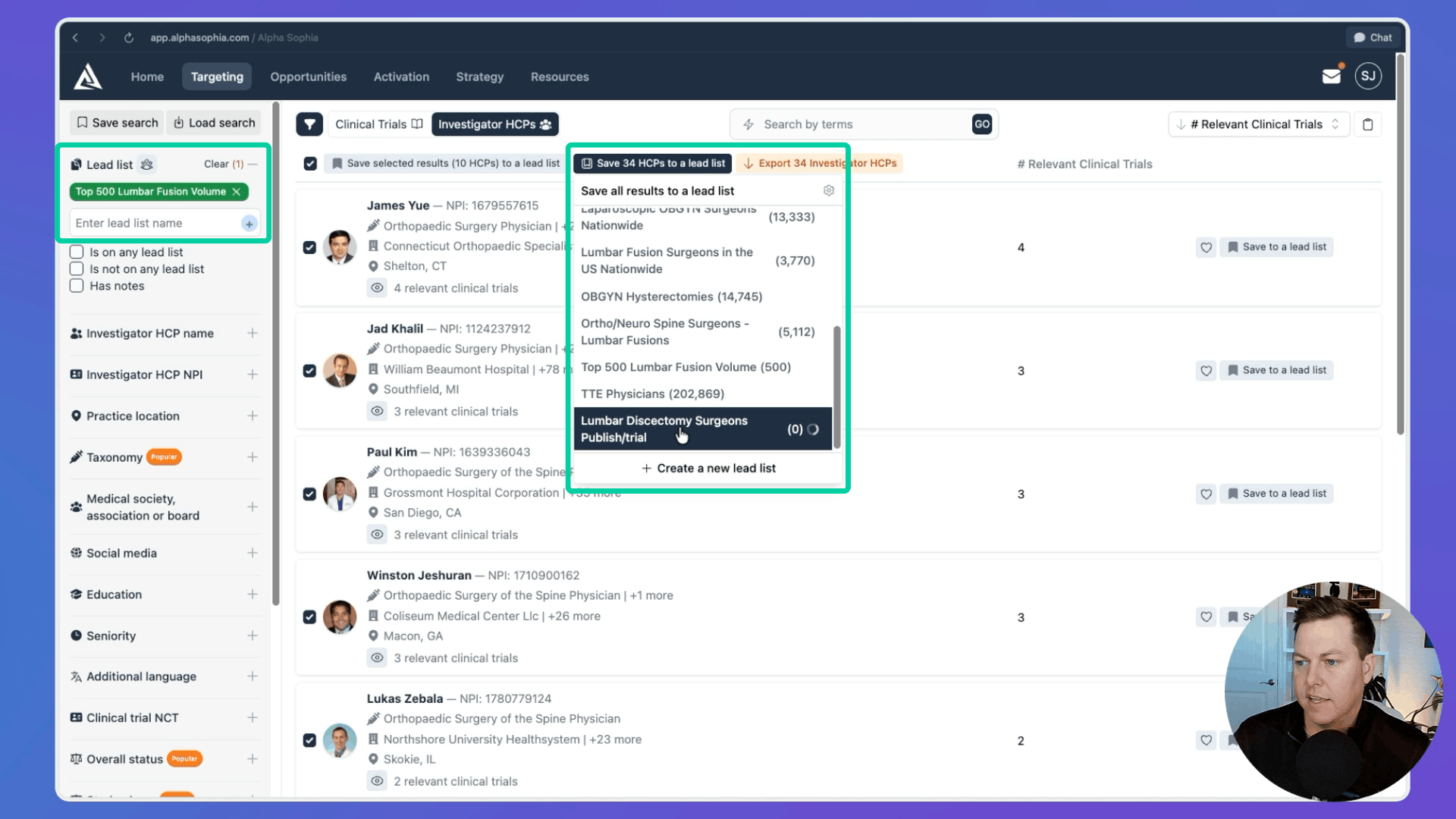
Load the lead list you built from your publication search into the clinical trials view. Now you’re seeing which physicians are both publishing and investigating in your space - these are your highest-priority KOL targets. Save these overlapping results to a dedicated lead list (e.g., “Lumbar Discectomy Surgeons - Publish/Trial”) for the next step.
7. Evaluating Procedure Volume with Billing Data
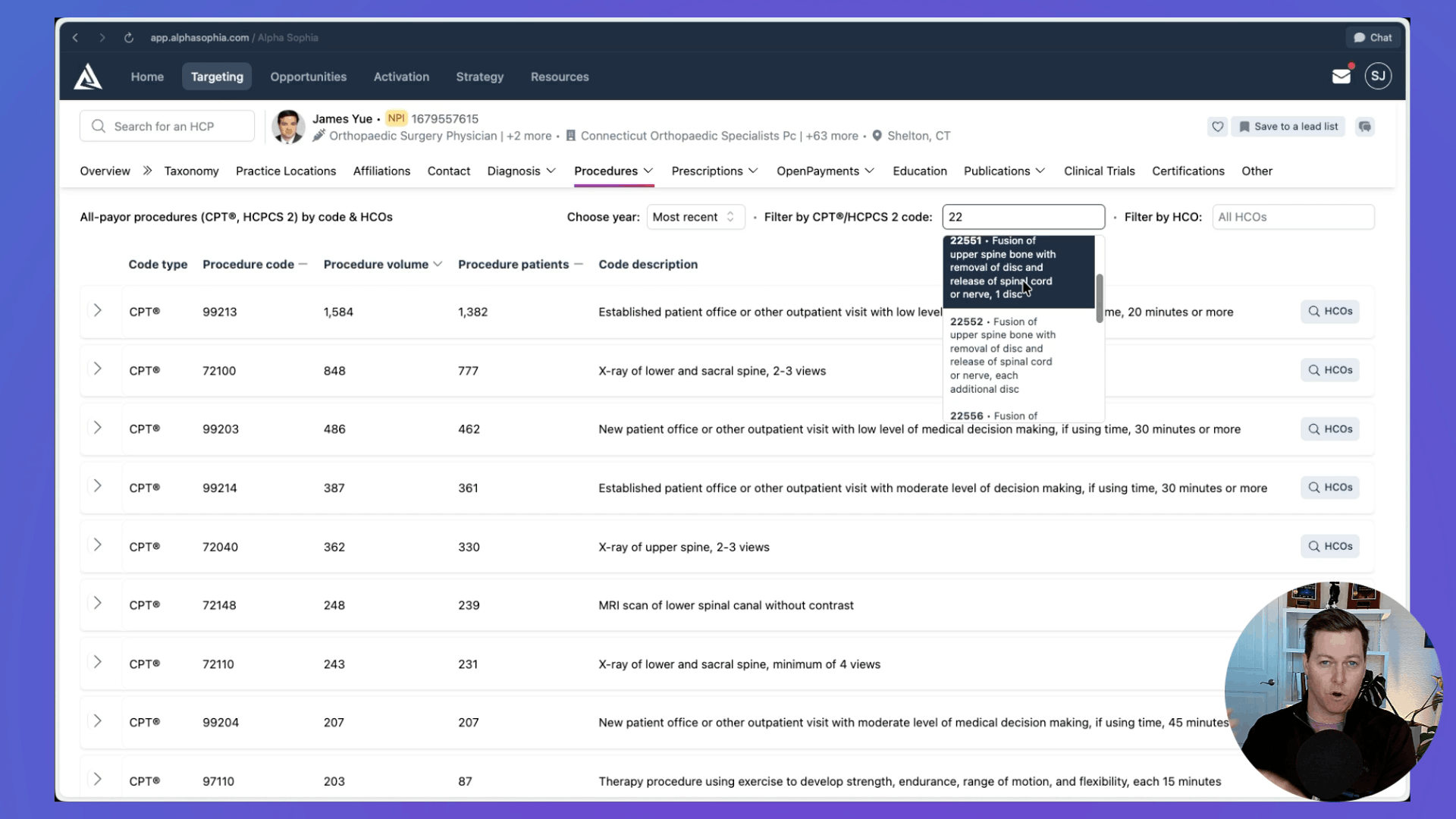
Open your refined lead list under Opportunities & Leads and dig into individual physician profiles. Review their billing data to see how many of your target procedures they’re coding for, whether volume is growing or shrinking, and which specific CPT codes they’re using. The billing data doesn’t lie - if they’re not coding for it, they’re not doing it.
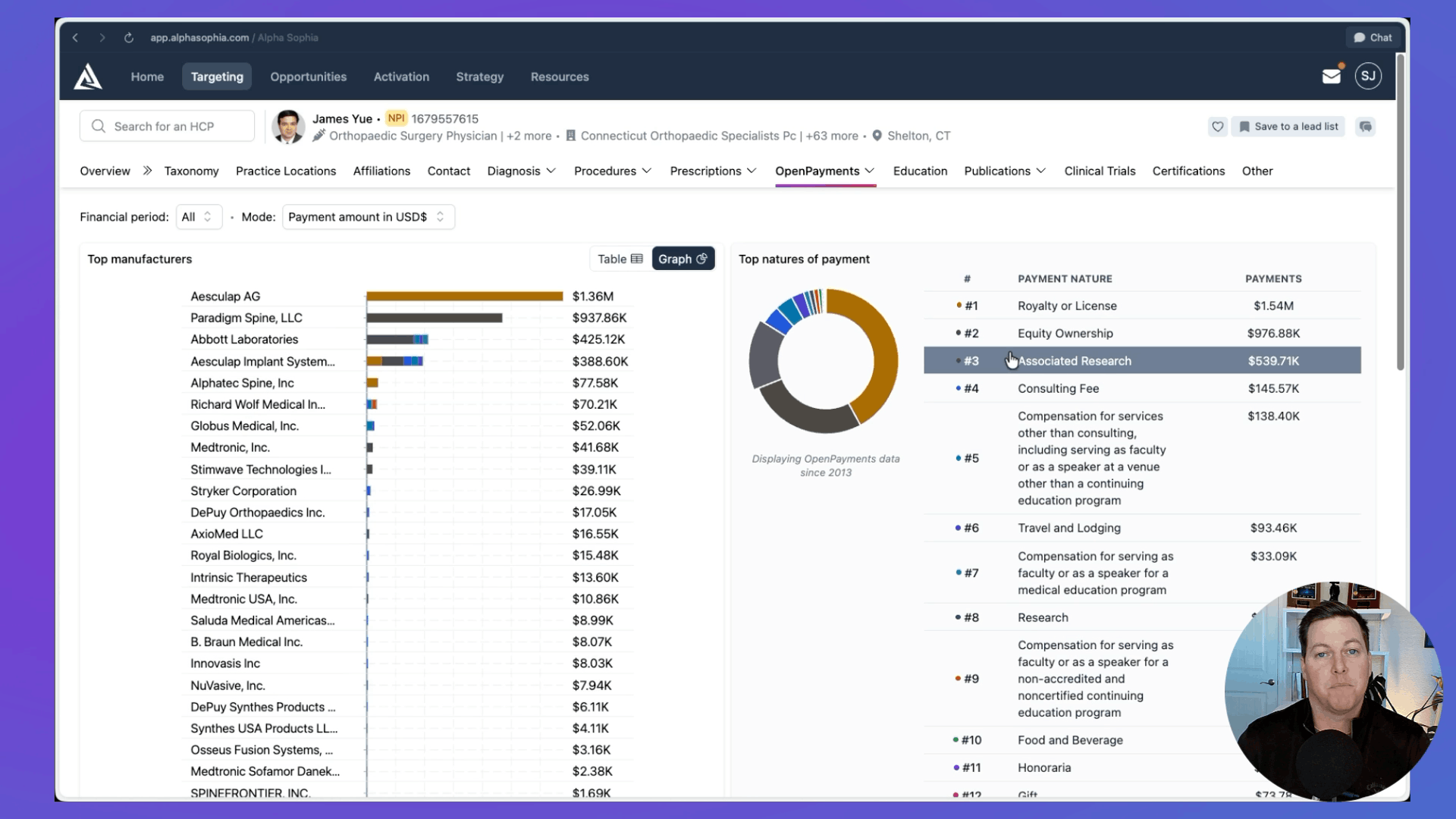
8. Adding the Competitive Intelligence Layer with Open Payments
Pull Open Payments data for each physician to see who else is already paying them - and what for. Consulting fees, research payments, royalties, and design consulting all tell a different story. A physician getting paid by a competitor isn’t a red flag - it confirms they’re engaged with industry, open to these relationships, and valuable enough that someone is already investing in them.
9. Building Your Tiered KOL Target List
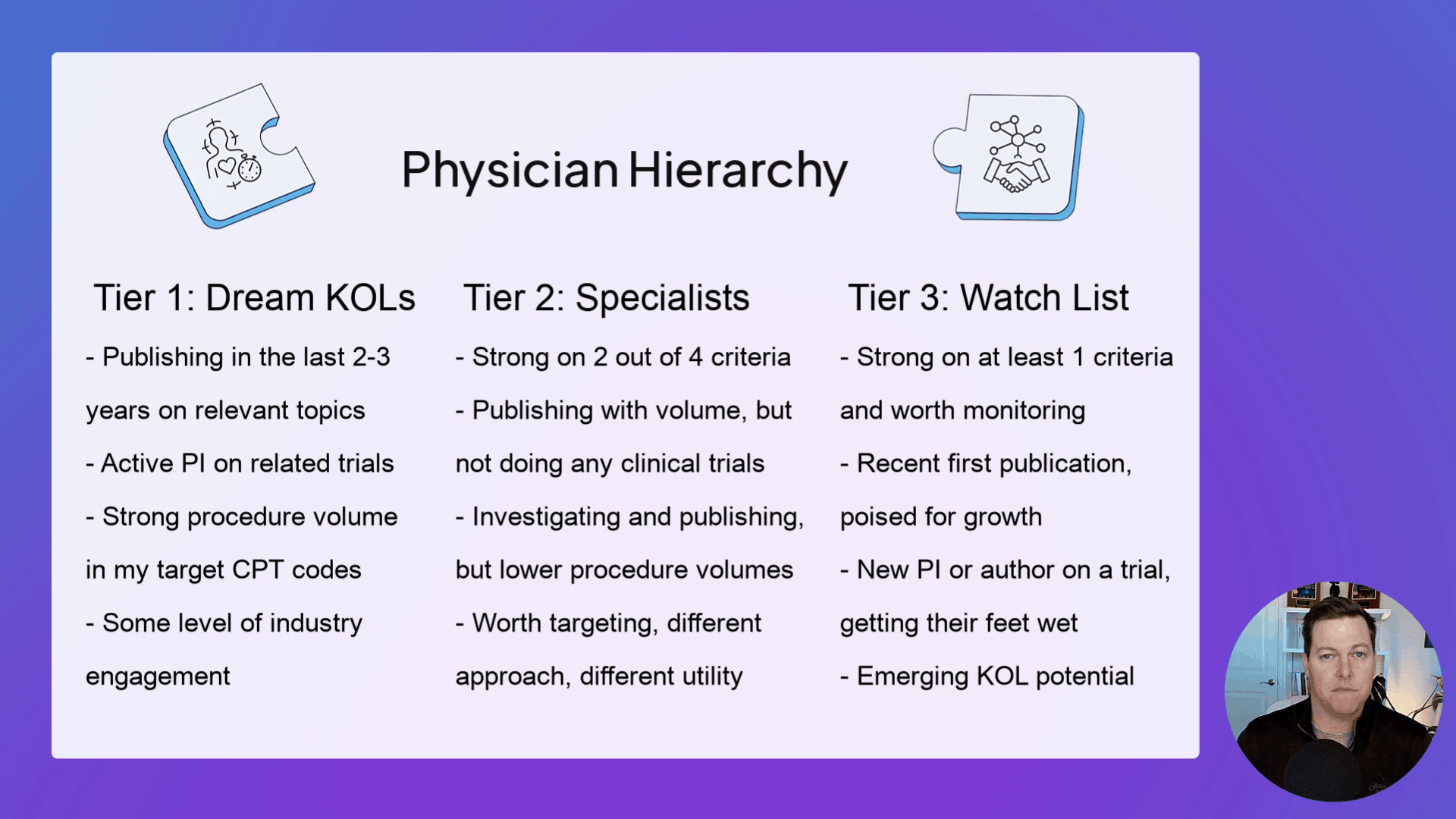
Segment your final list into three tiers based on the four pillars - publications, clinical trials, procedure volume, and industry engagement. Tier 1 (Dream KOLs) are strong across all four: publishing recently, active PI, meaningful procedure volume, and either a competitor conversion opportunity or untapped for industry engagement. Tier 2 (Specialists) are strong on two of four - maybe publishing and high volume but no trials, or investigating and publishing with lower volume. Tier 3 (Watch List) are strong on one - emerging KOLs worth monitoring and warming up.
10. Exporting & Maintaining Your KOL Strategy
Export your tiered list into your CRM with all supporting data attached - not just names, but publication history, trial involvement, procedure volumes, and payment data. Assign outreach ownership and plan your approach for each tier. This isn’t a one-time exercise - refresh your KOL analysis at least annually to track who performed well, who’s emerging, and where the landscape has shifted.
