How Remote Patient Monitoring (RPM) Codes and Diagnosis Data Unlock Smarter Healthcare Provider Targeting
On this page
Remote Patient Monitoring (RPM) has evolved from a niche innovation into a foundational component of modern healthcare delivery. What was once considered an experimental extension of care is now widely adopted across healthcare systems that are shifting toward value-based care, chronic disease management, and more decentralized models of patient engagement. As providers increasingly look to improve outcomes while reducing costs, RPM has become a critical tool in enabling continuous, proactive care.
At the same time, this evolution presents a major opportunity and a significant challenge for medical device companies, digital health platforms, and commercial teams. The central question is no longer whether RPM will grow, but rather how organizations can identify the healthcare providers who are actually using these technologies or are most likely to adopt them in the near future. Understanding this requires more than surface-level targeting; it requires a deep analysis of real-world clinical and operational data.
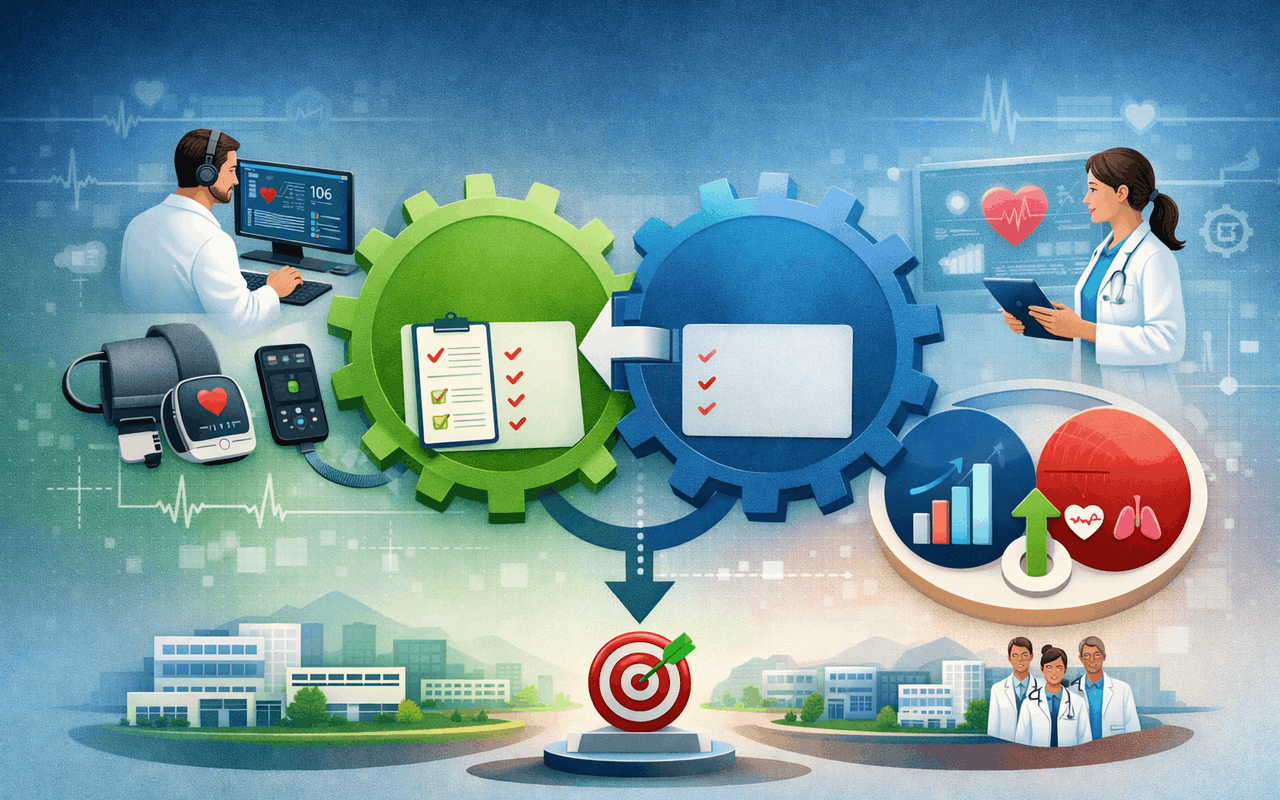
The most effective way to answer this question is by combining CPT billing codes, which reflect the services providers perform, with ICD-10 diagnosis data, which reflects the patient populations they treat. Together, these datasets — drawn from licensed US healthcare claims data — provide a powerful lens into both behavior and opportunity.
What Is Remote Patient Monitoring (RPM)?
Remote Patient Monitoring refers to the use of connected medical devices and digital health technologies that allow providers to monitor patients outside of traditional clinical settings. These devices collect health data such as blood pressure, glucose levels, oxygen saturation, or weight, and transmit that data back to healthcare providers for ongoing analysis and intervention.
To understand the practical impact of RPM, consider a patient with hypertension. Traditionally, this patient might visit a clinic every few months, providing only sporadic snapshots of their condition. With RPM, however, the patient can measure their blood pressure daily at home using a connected device. The provider receives a continuous stream of data, allowing them to identify patterns, detect early warning signs, and adjust treatment plans proactively rather than reactively.
A helpful analogy is to think of RPM as the difference between checking the weather once a month and having access to a real-time weather radar. The former gives you limited, outdated information, while the latter allows you to anticipate and respond to changes as they happen. In healthcare, this shift from episodic to continuous monitoring fundamentally changes how care is delivered.
Understanding RPM CPT Codes and Their Strategic Importance
While RPM is clinically transformative, its adoption is closely tied to reimbursement structures. In the United States, these structures are defined through CPT (Current Procedural Terminology) codes, which providers use to bill for services delivered. These codes are far more than administrative tools; they represent verified records of clinical activity, making them an invaluable source of insight for commercial and strategy teams.
Several CPT codes define the RPM workflow. Code 99453 covers the initial setup of monitoring devices and patient education, ensuring that patients can use the technology effectively. Code 99454 covers the provision of devices and the transmission of patient data over a defined period, typically 30 days. Codes 99457 and 99458 cover the time providers spend reviewing data and managing patient care, with 99457 accounting for the first 20 minutes and 99458 covering additional time. Each of these codes reflects a specific stage in the RPM lifecycle, from onboarding to ongoing care management.
From a commercial perspective, CPT codes provide a direct window into what providers are actually doing in practice. A provider who consistently bills RPM codes is actively delivering remote monitoring services and has integrated them into their workflow. This is fundamentally different from a provider who may express interest in RPM but has not operationalized it. This distinction can be compared to consumer behavior in digital platforms, where a user who downloads an app but never uses it is very different from a user who engages with it daily. CPT codes capture this engagement at the clinical level, allowing organizations to differentiate between intent and action.
For a deeper exploration of how procedural and diagnosis data can be used to identify the right providers, see the Alpha Sophia article: How Specialty Labs Find the Exactly Right Doctors Using Diagnosis Data.
The Critical Role of Diagnosis Data (ICD-10)
While CPT codes reveal what services providers are delivering, ICD-10 diagnosis codes provide insight into the types of patients they treat. This distinction is essential for understanding RPM adoption, as the value of remote monitoring is closely tied to specific chronic conditions.
Common ICD-10 codes relevant to RPM include I10 for hypertension, E11.x for type 2 diabetes, I50.x for heart failure, and J44.x for chronic obstructive pulmonary disease. These conditions require ongoing management and are particularly well-suited to continuous monitoring.
To illustrate the importance of diagnosis data, consider two providers. The first provider occasionally bills RPM codes but treats relatively few patients with chronic conditions. The second provider treats a large population of patients with diabetes and hypertension but has not yet adopted RPM. If you only analyze CPT data, the first provider may appear more relevant. However, when you incorporate diagnosis data, the second provider emerges as a significantly larger opportunity. This provider has a high concentration of patients who would benefit from RPM, making them an ideal candidate for adoption.
This dynamic is similar to evaluating business opportunities in retail. A store that already sells a product may generate steady revenue, but a store located in a high-demand area that does not yet carry the product may represent a much larger growth opportunity.
Combining CPT and ICD-10 Data for Strategic Targeting
The true power of healthcare data emerges when CPT and ICD-10 datasets are combined. Together, they allow organizations to move beyond surface-level targeting and toward precise, behavior-based segmentation.
Providers can be segmented into several categories based on their clinical activity and patient populations. Active RPM adopters are those who frequently bill RPM codes and treat large volumes of chronic patients. These providers represent high-value accounts that are already convinced of RPM’s benefits and may be open to expanding their usage.
High-potential targets are providers who treat large numbers of patients with RPM-relevant conditions but have not yet adopted remote monitoring. These providers represent significant growth opportunities, as they have both the clinical need and the potential to benefit from RPM solutions.
Low-priority providers are those who treat relatively few chronic patients and do not use RPM. While they may adopt RPM in the future, their immediate commercial value is limited.
For more on how to build precise provider cohorts using claims and diagnosis data, see: Healthcare Provider Targeting Using Claims Data.
How Alpha Sophia Enables Precision RPM Targeting
Alpha Sophia integrates multiple layers of healthcare data into a unified platform, enabling organizations to move from static targeting to dynamic, data-driven strategies. By combining billing data, diagnosis data, provider attributes, organizational affiliations, and scientific activity, Alpha Sophia provides a comprehensive view of healthcare provider behavior.
With Alpha Sophia, teams can identify providers who are actively using RPM, quantify their level of engagement, and track how their usage evolves over time. At the same time, they can uncover providers who have high patient need but have not yet adopted RPM, allowing for targeted outreach and education.
The platform also enables teams to understand the clinical context of RPM usage, linking it to specific diagnoses, care settings, and patient populations. This allows for more personalized and effective engagement strategies.
Rather than relying on broad categories such as specialty or geography, organizations can build highly targeted lists based on real-world activity. For example, they can identify providers treating large volumes of heart failure patients who are already using RPM, or providers treating diabetic populations who have not yet adopted it.
Real-World Applications Across Healthcare Organizations
The ability to combine CPT and ICD-10 data has practical applications across a wide range of healthcare organizations. Medical device companies can use this data to identify providers who are most likely to adopt connected devices and prioritize their sales efforts accordingly. Digital health platforms can use it to identify providers with high patient need and tailor their messaging to emphasize improved outcomes and efficiency.
Commercial teams can use these insights to align their territories with actual clinical activity rather than arbitrary geographic boundaries. This ensures that resources are allocated where they are most likely to generate impact.
Why Static Targeting Is No Longer Sufficient
Traditional healthcare targeting methods often rely on static attributes such as provider specialty or location. While these attributes provide some level of insight, they fail to capture the dynamic nature of clinical practice.
Relying on static lists is comparable to navigating with an outdated map. Conditions change, new roads are built, and traffic patterns evolve. In contrast, using real-world data is like using a live GPS system that reflects current conditions and allows for more informed decision-making.
The Growing Importance of RPM Data in Healthcare Strategy
As interest in topics such as remote patient monitoring CPT codes, RPM reimbursement, healthcare provider targeting using claims data, and ICD-10 chronic disease segmentation continues to grow, organizations that can effectively leverage these data sources will gain a significant competitive advantage.
The ability to combine clinical intelligence with commercial strategy is becoming a defining factor in success across medtech and digital health.
Final Thoughts
Remote Patient Monitoring represents a fundamental shift in how healthcare is delivered. However, realizing its full potential requires more than adopting new technologies. It requires a deep understanding of provider behavior, patient populations, and real-world clinical activity.
By combining CPT billing data with ICD-10 diagnosis data, organizations can move beyond guesswork and toward precise, data-driven targeting. Alpha Sophia enables this transformation by providing the tools and insights needed to identify the right providers, prioritize opportunities, and execute more effective go-to-market strategies.
Frequently Asked Questions (FAQ)
-
What are RPM CPT codes and why are they important?
RPM CPT codes are billing codes that allow providers to be reimbursed for remote monitoring services. They are important because they provide a reliable indicator of whether a provider is actively delivering RPM. -
How can organizations identify providers using RPM?
Organizations can analyze claims data to identify providers billing RPM-related CPT codes such as 99453, 99454, 99457, and 99458. The frequency of billing provides insight into the level of adoption. -
Why is ICD-10 diagnosis data important for RPM targeting?
ICD-10 diagnosis data reveals the types of patients a provider treats. This allows organizations to identify providers with a high concentration of patients who would benefit from RPM, even if they have not yet adopted it. -
What conditions are most relevant for RPM?
Chronic conditions such as hypertension, diabetes, heart failure, and COPD are among the most common use cases for RPM because they require continuous monitoring and management. -
How does combining CPT and ICD-10 data improve targeting?
Combining these datasets provides a more complete picture of provider behavior and opportunity, allowing organizations to prioritize high-value targets and tailor their outreach strategies. -
Who benefits from RPM data insights?
Medical device companies, digital health platforms, and commercial strategy teams all benefit from the ability to identify high-value providers and align their efforts with real-world clinical activity. -
How does Alpha Sophia support RPM targeting?
Alpha Sophia integrates claims data, diagnosis data, and provider intelligence into a unified platform, enabling precise segmentation, KOL identification, and data-driven go-to-market execution.
Valuable links on Remote Patient Monitoring
-
Understanding Remote Patient Monitoring (CMS)
This is the official CMS overview of RPM, explaining how connected devices collect patient data and how providers use it for treatment decisions. It also outlines eligibility requirements and how RPM fits into Medicare reimbursement
-
Billing for Remote Patient Monitoring (HHS Telehealth)
A practical guide to RPM billing requirements, including what qualifies for reimbursement, how physiologic data must be collected, and how RPM differs from remote therapeutic monitoring (RTM).
-
Remote Patient Monitoring Billing Overview (HealthSnap)
A detailed breakdown of how RPM reimbursement has evolved and why it has become a flexible and scalable care model for health systems.
-
RPM CPT Codes 2025 Billing Guide (Tenovi)
A practical guide to the most commonly used RPM CPT codes (99453, 99454, 99457, 99458) and how providers can ensure compliance while maximizing reimbursement.
-
How to Bill Medicare for RPM with ICD-10 Codes (ThoroughCare)
Explains how ICD-10 diagnosis codes are required for RPM billing and highlights the most common conditions associated with remote monitoring, including hypertension, diabetes, and COPD.
